**The Teacher Who Changed Me**
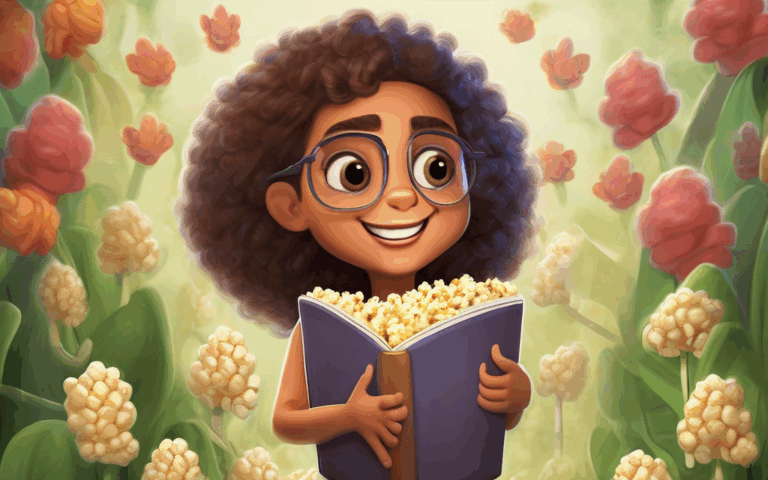
Maya loved learning, most of the time. She loved diving into thrilling adventure books, losing herself in tales of brave knights and mysterious lands. She also enjoyed the satisfying challenge of solving tricky math problems, where numbers clicked into place like pieces of a puzzle. But there was one thing that always made her tummy flutter with a nervous little butterfly: anything that involved hands-on projects or working in a group where she felt like every pair of eyes was watching her every move.
This year, in fifth grade, her science teacher was Mr. Harrison. He was new to Northwood Elementary, and he quickly gained a reputation for making science “come alive.” Maya had heard whispers about exciting experiments that fizzed and bubbled, and building intricate models. A tiny, hopeful part of her felt a spark of excitement at these possibilities, but a much bigger part felt a familiar wave of dread wash over her.
Maya wasn’t a bad student, not at all. She was diligent, studied hard, and understood complex concepts quickly when they were explained clearly in a textbook. But when it came to building a model volcano that actually erupted, or designing a functional bird feeder, her hands seemed to turn clumsy, and her brilliant ideas seemed to vanish into thin air. She often felt a rush of crushing frustration, her shoulders slumping with defeat. Soon, she would just give up, telling herself, “I’m just not good at this.” It felt easier, and less embarrassing, to simply not try than to try with all her heart and then fail in front of everyone.
One crisp Tuesday morning, Mr. Harrison stood at the front of the classroom, his smile wide as he announced their big spring project: a community garden. “We’re going to transform the unused, overgrown patch behind the school into a vibrant, living garden,” he explained, his eyes sparkling with genuine enthusiasm. “Each team will be responsible for a section, from preparing the soil and choosing what to plant, to nurturing and caring for our very own vegetables and beautiful flowers. Imagine the fresh salads and colorful bouquets!”
Maya’s heart sank like a stone. A garden? That sounded like an endless amount of digging, carefully planting tiny seeds, and then the agonizing wait, hoping they would grow. What if her plants didn’t sprout? What if her team’s section looked sparse and messy compared to everyone else’s thriving plots? She could already picture her carefully buried seeds refusing to emerge, or her tiny, precious seedlings wilting sadly under her clumsy care. She felt the familiar, overwhelming urge to just disappear, to pretend she was sick every single garden day.
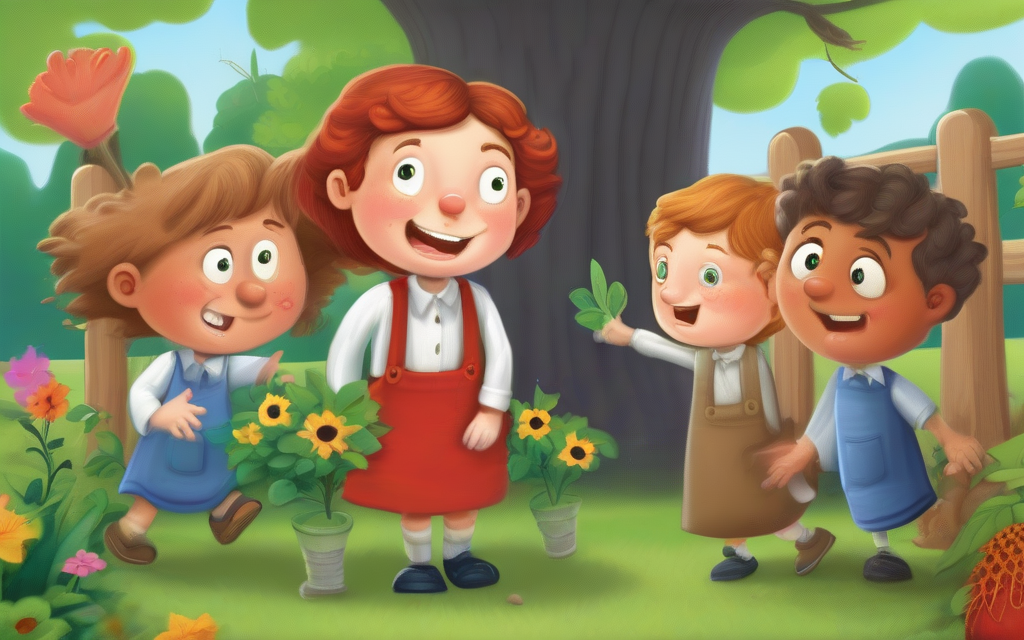
Mr. Harrison assigned teams, making sure each group had a mix of different strengths. Maya was paired with Leo, a boy known for his boundless energy and a fantastic knack for tinkering and fixing things. Their other teammate was Chloe, who loved drawing and planning with colorful pens. Maya immediately thought, “Great. Leo will do all the hard work, Chloe will make everything look pretty, and I’ll just stand there, feeling completely useless and in the way.”
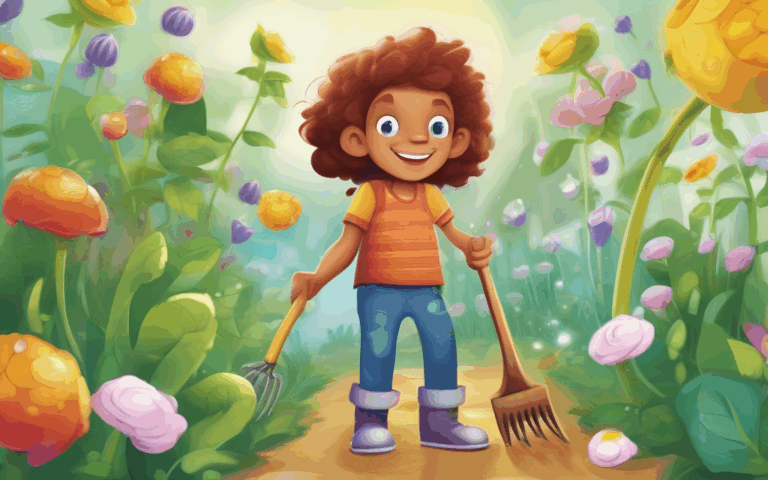
Their first task was a daunting one: clearing their patch of tough, stubborn weeds and hidden rocks. Maya started with good intentions, pulling a few small dandelions with surprising ease. But soon, her hands began to ache, and her back started to feel stiff. She watched Leo enthusiastically attacking a large clump of weeds with a sturdy shovel, while Chloe meticulously sketched out a detailed layout for their future plants on a clipboard. Maya felt a wave of discouragement wash over her. “This is too hard,” she muttered under her breath, dropping her small trowel with a clink.
Mr. Harrison, with his uncanny ability to appear just when someone needed him most, walked over, a friendly, encouraging smile on his face. “Everything alright, Maya?” he asked gently.
“It’s just… this patch is full of the most stubborn weeds, Mr. Harrison, and I don’t know how to make them come out,” she admitted, pointing to a particularly thorny, deep-rooted bush that seemed to be laughing at her efforts.
“Sometimes,” Mr. Harrison said, his voice calm and thoughtful as he knelt beside her, “the toughest challenges need a slightly different approach. You could try loosening the soil around it first, or maybe even finding a tool that gives you more leverage.” He didn’t pull the weed for her. Instead, he handed her a small but sturdy hand rake. “Think of it like a puzzle, Maya. What’s the best way to solve this piece of the problem?”
Maya hesitated, then picked up the rake. She tried his suggestion, carefully raking the soil around the thorny bush. To her surprise, when she tried pulling again, the bush came out with much less resistance. It wasn’t magic, just a clever, different method. A tiny, hopeful spark of curiosity flickered inside her, pushing back against the old feeling of defeat.
Over the next few weeks, the garden project presented many, many more challenges. Their team’s first batch of bean seeds, carefully planted, simply didn’t sprout. Maya’s immediate, familiar reaction was to blame herself and declare, “See? I told you I was bad at this! My plants never grow!”
But Mr. Harrison, sensing the class’s collective disappointment, gathered everyone. “Gardeners, scientists, artists – every single person makes mistakes,” he said, holding up a faded seed packet. “The important thing isn’t to never make a mistake. It’s to understand *why* something happened and what valuable lesson we can learn from it. Did we plant them too deep? Not deep enough? Did they get enough water, or too much?” He didn’t make them feel bad, but instead curious.
He then showed them how to gently dig up a few non-sprouting seeds to investigate, like tiny detectives. Maya, usually quick to retreat and avoid anything that felt like failure, found herself leaning in, genuinely intrigued by the scientific mystery. They discovered some seeds had been planted too deep, while others hadn’t gotten enough sunlight because of a sneaky shadow. They replanted a new batch, this time with more careful measurements, paying close attention to depth and light, and ensuring better, consistent watering.
Maya also slowly learned to truly work with Leo and Chloe. Leo was fantastic at the heavy lifting, effortlessly turning the soil and troubleshooting when a watering can spout broke. Chloe had amazing, creative ideas for companion planting – strategically putting certain plants next to each other to help them grow bigger and stronger. Maya, initially quiet and reserved, found herself confidently contributing her knowledge from reading about plants in books, surprising herself with how much she actually knew. She meticulously helped organize their tools, creating a system so nothing was lost, and diligently kept track of their watering schedule. She even found she enjoyed the quiet, careful task of gently tending the new, tender seedlings, carefully removing the tiny, sneaky weeds that threatened to choke them.
One breezy afternoon, a strong gust of wind blew through the garden, knocking over some of their small, promising tomato plants. Maya felt a familiar wave of despair wash over her. “Oh no! Now what are we going to do?” she sighed, her shoulders slumping again.
Mr. Harrison, passing by, found her looking utterly dejected. “Remember our lesson about perseverance, Maya?” he asked softly. “A plant might bend and seem to fall, but if its roots are strong and we help it stand tall again, it can still recover and grow.” He showed them how to gently stake the plants, providing sturdy support with small wooden sticks and soft ties. “Just like us,” he added. “Sometimes we need a little support from others to get back up when life tries to knock us down.”
Slowly, beautifully, their section of the garden transformed. Tiny, hopeful green shoots emerged from the dark, rich soil. Bright, cheerful marigolds bloomed in sunny yellows and oranges, attracting buzzing bees and graceful butterflies. Soon, small, firm green tomatoes began to appear on the staked plants, eventually ripening into juicy red globes, and sturdy bean pods hung heavy from their vines. Maya looked at the vibrant patch of green and color, and a deep warmth spread through her chest. It wasn’t absolutely perfect, but it was *theirs*, and she had helped make it happen with her own hands and determination.
On the sunny day of the school’s first-ever community garden harvest festival, their section was brimming with life and color. Maya proudly pointed out the plump, ripe tomatoes and the crisp, leafy lettuce her team had grown. She even confidently explained to a younger student how companion planting worked, sharing a valuable lesson she had learned from Chloe and Mr. Harrison. She felt a surge of confidence she had never experienced before in a project like this.
As the joyful day ended and students began to pack up, Mr. Harrison called Maya aside. “Maya,” he said, his voice kind and full of genuine admiration, “I’ve seen a real, incredible change in you this semester. You faced so many challenges, you didn’t give up even when it was hard, and you helped your team create something truly wonderful. You learned that you are capable of so much more than you ever thought possible.”
Maya felt a warm blush creep up her cheeks, but it was a blush of deep pride, not embarrassment. “I used to think I was just bad at these kinds of things, Mr. Harrison,” she confessed, looking at her dusty, calloused hands. “But you… you didn’t just tell us what to do. You showed us how to figure things out for ourselves, and that it’s okay to struggle. You taught me that trying again, and again, is the most important part.”
Mr. Harrison smiled, his eyes twinkling. “That, Maya, is one of the greatest lessons a teacher can ever hope for a student to learn. Life is going to be full of challenges, big and small, easy and difficult. The real strength isn’t in never making mistakes, or in being perfect from the start. It’s in how we pick ourselves up when we stumble, how we learn from those mistakes, and how we find the courage to keep going forward.”
From that day on, Maya approached new challenges with a completely different mindset. She still felt a flicker of nervousness sometimes, especially when facing something new and daunting. But instead of giving up or retreating, she’d take a deep breath, remember the stubborn weeds and the fallen tomato plants that they had helped stand tall again, and think, “What’s my next step? How can I figure this out? What can I learn here?” She learned to bravely ask questions, to try different ways, and most importantly, to trust that with effort, perseverance, and a little help from others, she could grow, just like the seeds in their beautiful community garden.
Mr. Harrison taught her that growing wasn’t just about getting physically bigger or academically smarter. It was about becoming stronger inside, more resilient, and kinder, both to herself and to everyone around her. And that, Maya realized with a grateful heart, was the most important, life-changing lesson of all.