The sun peeked over the hills, painting the sky in shades of pink and orange. Inside Mrs. Davis’s fifth-grade classroom, excitement buzzed like a hive of happy bees. Today was the day to plan their end-of-year picnic, a tradition everyone looked forward to.
Mrs. Davis smiled at her class. “Alright, team,” she began, “let’s make this year’s picnic the best one yet! What are your ideas?”
Hands shot up across the room. Maya suggested sandwiches. Sam wanted juice boxes. Chloe dreamed of colorful balloons and party hats. Leo, usually quick to offer ideas, sat a little quieter, a thoughtful frown on his face.
“Leo, is something on your mind?” Mrs. Davis asked kindly.
Leo cleared his throat. “Mrs. Davis, everyone’s ideas sound fun, but… well, I was just thinking about all the plastic we might use. Juice boxes, plastic wrap for sandwiches, plastic forks, balloons… Last week, we learned about how plastic stays in the environment for hundreds of years and can hurt animals. What if we tried something different?”
A ripple of murmurs went through the room. Some kids looked confused. “But how would we eat?” asked Liam, scratching his head. “And what about the juice?”
Mrs. Davis clapped her hands gently. “That’s a wonderful point, Leo. It’s true, we often use a lot of plastic without even thinking about it. What if we made this year’s picnic a ‘Plastic-Free Picnic’?”
A few groans mixed with curious whispers. “Plastic-free?” Mia wondered aloud. “Is that even possible?”
“It definitely is!” Mrs. Davis’s eyes sparkled. “It might be a challenge, but I think we’re up for it. It will take teamwork and some clever thinking. Who’s ready to try?”
Slowly, hands began to rise, first Leo’s, then Maya’s, then Sam’s, until most of the class was nodding with newfound determination.
The class split into groups to brainstorm. Leo, Maya, Sam, and Chloe formed one team, eager to tackle the challenge. Their first problem was food.
“Sandwiches are easy,” Maya said, “but how do we wrap them without plastic?”
Leo remembered something his mom did. “My mom uses beeswax wraps! They’re like cloth, but coated in beeswax, so they keep food fresh. Or we could use small reusable containers.”
“Good idea!” Chloe exclaimed. “And for snacks, instead of bags of chips, we could bring a big bowl of popcorn or some fruit cut up in a container!”
Sam, who loved to draw, sketched their ideas on a large piece of paper. “What about drinks?” he asked. “No juice boxes or plastic bottles.”
“Everyone can bring their own reusable water bottle from home,” Leo suggested. “We can even make a big pitcher of homemade lemonade or iced tea and pour it into their bottles when they get there.”
The food challenge seemed solvable. Next up: cutlery, plates, and cups.
“My grandma has real plates and metal forks,” Maya said, “but we can’t bring those to the park. They might break.”
“We could ask everyone to bring a reusable plate and cup from home, maybe made of bamboo or sturdy plastic that they can wash and take back,” Leo offered. “And for forks, maybe we can use reusable sporks, or even pack things that don’t need cutlery, like veggie sticks and mini muffins.”
The ideas flowed. For decorations, instead of balloons, they decided to make colorful paper streamers and pick wildflowers (being careful not to pick too many and only where allowed). For games, they’d bring a frisbee, a soccer ball, and jump ropes, all things they already owned.
The biggest challenge was getting everyone on board and organized. They designed posters showing their plastic-free ideas and presented them to the class. Mrs. Davis helped them create a checklist for each student:
* Reusable lunch container for sandwiches/snacks
* Reusable water bottle (filled with water or homemade drink)
* Reusable plate and cup (made of bamboo, metal, or sturdy reusable plastic)
* Reusable cloth napkin
* Any games or activities they wanted to share
The day before the picnic, the classroom was buzzing not just with excitement, but with purpose. Leo helped Liam understand how to pack his fruit in a small glass jar his mom found. Maya showed Sarah how her beeswax wrap kept her sandwich perfectly fresh. Parents even got involved, helping to bake cookies and make big batches of lemonade to bring in large insulated dispensers.
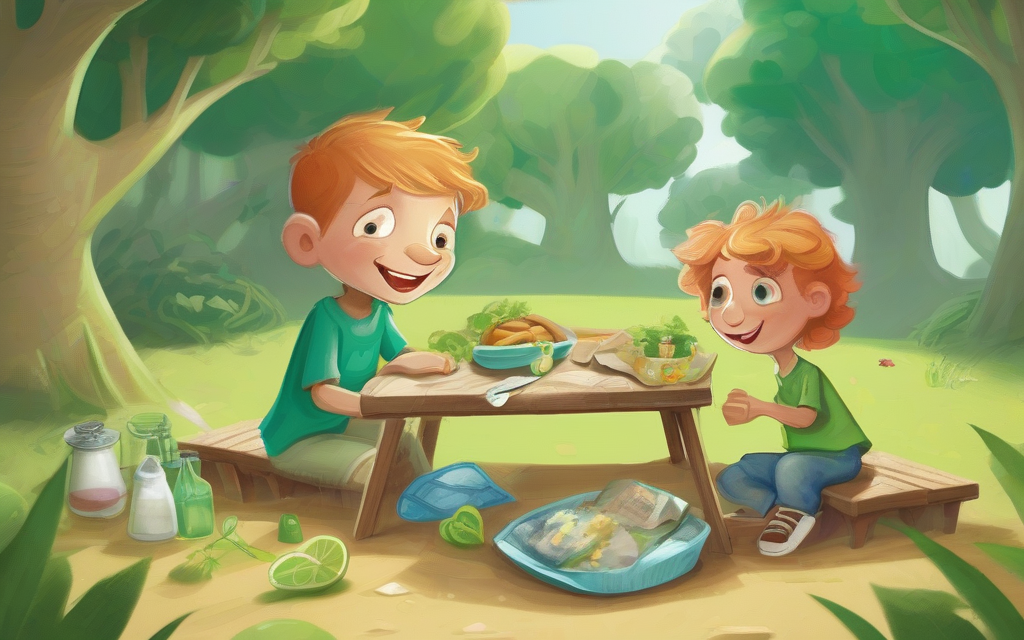
Finally, picnic day arrived. The sun shone brightly, and a gentle breeze rustled the leaves in Willow Creek Park. When the class arrived, a colorful array of reusable containers, water bottles, and cloth napkins covered the picnic blankets. There were no plastic bags rustling in the wind, no plastic bottles rolling away.
The air smelled of fresh-cut grass and homemade lemonade. Children laughed as they played frisbee, ran races, and shared stories. When it was time to eat, everyone carefully unwrapped their sandwiches from beeswax wraps, spooned out fruit from small jars, and filled their reusable cups with cool lemonade.
“This feels different,” Chloe observed, biting into a crunchy carrot stick. “It’s… cleaner.”
“And tastier!” Sam added, enjoying a homemade cookie from a metal tin.
Leo smiled, watching his friends. He felt a warm glow inside. It wasn’t just about avoiding plastic; it was about making smart choices, working together, and seeing the positive impact of their actions.
After everyone had eaten, they gathered all their reusable items. There was hardly any trash – just a few fruit peels and crumbs, which they carefully collected to take home for composting if possible. The park looked just as clean and beautiful as when they arrived.
Mrs. Davis gathered everyone for a final moment. “Look around,” she said, gesturing to the pristine park. “We did it. We had a wonderful picnic, full of delicious food, fun games, and great company, all while being kind to our planet. It wasn’t always easy, but you showed incredible teamwork, creativity, and responsibility.”
She paused, her gaze sweeping over each proud face. “Remember this feeling. Every small choice you make, every time you choose reusable over disposable, every time you think about the impact of your actions, you’re making a big difference. You’re helping to protect the beautiful world around us.”
As they packed up, giggling and chatting, Leo knew this wasn’t just any picnic. It was a lesson in how easy it can be to change habits for the better, and how much joy can come from caring for something bigger than yourself. He realized that protecting the Earth didn’t mean giving up fun; it just meant finding new, clever, and often better ways to have it.
The moral of the story is: **Small, thoughtful choices, made together, can create a big, positive change for our planet and make every experience even more special.** By being mindful and working as a team, we can enjoy ourselves while protecting the beautiful world we live in.