The Value of Pocket Money
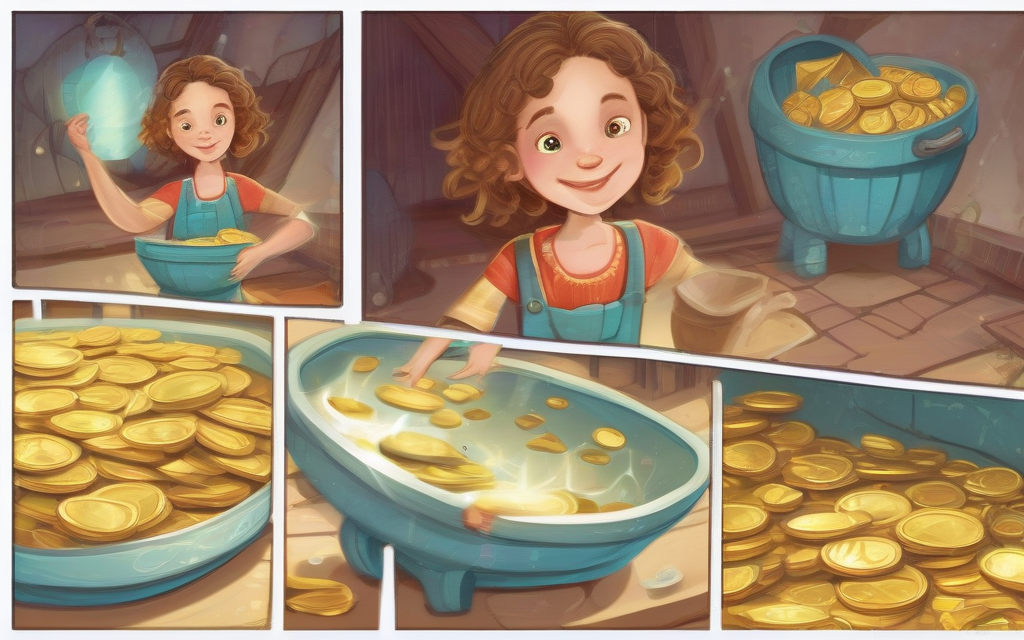
Lily hummed a cheerful tune as she skipped down the garden path. The sun was shining, a gentle breeze rustled the leaves, and today was a special day. Today, Lily, who was eleven years old, would receive her very first pocket money.
Her parents, Mr. and Mrs. Miller, had called her to the kitchen after breakfast. “Lily,” her dad began, “your mum and I have decided it’s time for you to learn about managing money.”
Lily’s eyes widened. “Pocket money? Really?”
Her mum smiled. “Yes, darling. Every Saturday, you’ll receive ten dollars. But it comes with a few responsibilities. You’ll need to help with chores, keep your room tidy, and we’ll expect you to think carefully about how you spend or save it.”
Lily nodded eagerly. Ten dollars! That sounded like a treasure chest! She imagined all the wonderful things she could buy. A new sparkly gel pen set! A giant bag of sour gummy worms! Maybe even a comic book!
Her first week’s ten dollars felt warm in her hand. She immediately went to the corner shop and bought the gel pens and the gummy worms. They were delicious, and the pens drew beautiful, shimmering lines. She felt rich and happy. But by Monday, the gummy worms were gone, and she already had many gel pens. Her special money had vanished almost as quickly as it had appeared.
The next Saturday, the same thing happened. A small toy, a packet of shiny stickers, and a fizzy drink. Again, the joy lasted only a short while. Lily started to feel a tiny bit of disappointment. Was this all pocket money was for? Small, fleeting pleasures?
One afternoon, while browsing online, Lily saw something truly special. It was a professional art kit, filled with vibrant watercolours, soft pastels, and a set of high-quality brushes. The kind of kit real artists used! She loved to draw and paint, and this kit would let her create amazing masterpieces. But it cost fifty dollars.
Fifty dollars! That was five weeks of her pocket money. Lily sighed. She had only two dollars left from this week. Saving up for something so big seemed impossible.
That evening, she talked to her mum. “Mum, I really want this art kit, but it costs so much! I spend my money so quickly.”
Her mum sat down beside her. “That’s perfectly normal, Lily. Learning to save is a skill, just like learning to ride a bike. It takes practice and patience. Why don’t we make a plan?”
Together, they made a simple saving chart. Lily drew a picture of the art kit at the top. For every ten dollars she saved, she would colour in a section of a savings jar she drew next to it. She decided to put half of her weekly pocket money, five dollars, straight into her special savings jar. The other five dollars she could use for smaller treats or spend as she wished.
The first week of saving felt strange. Her friend, Tom, bought an ice cream after school, and Lily had to resist. She really wanted one! But she remembered the art kit. She imagined the beautiful colours. She drank water instead and felt a little proud of herself.
Slowly, her savings jar started to fill up. Five dollars, then ten, then fifteen. It was exciting to see the colours fill her drawing. She even found ways to earn a little extra. Her dad paid her a few dollars for helping him wash the car, and her grandma gave her a small amount for weeding her garden. Every dollar felt like a step closer to her dream art kit.
One Saturday, while visiting the local community centre with her mum, Lily saw a poster. “Volunteers Needed for ‘Paint the Park’ Project!” it read. The project aimed to brighten up the local playground with colourful murals, but they needed art supplies and more hands to help.
Lily’s heart fluttered. This was perfect! She had almost forty dollars saved for her kit. She could buy it soon! But then she thought about the playground. It looked a bit dull and faded. Imagine if it was bursting with colour, painted by kids for kids!
“Mum,” Lily said, pulling on her mum’s sleeve, “I think I want to do something else with my money.”
Her mum looked surprised but listened patiently as Lily explained her idea. “What if,” Lily said, “I buy some paints and brushes for the ‘Paint the Park’ project instead? I could still get my art kit later, but this feels important.”
Her mum smiled, a truly proud smile. “That’s a wonderful idea, Lily. It shows you’re thinking not just about what you want for yourself, but about how you can help others and your community.”
The next week, Lily went to the art supply store with her mum. Instead of buying her dream kit, she carefully selected several large tubes of bright, weather-resistant paint and a sturdy set of brushes, enough for several children to use. It cost her thirty-five dollars, leaving her with a small amount still in her savings jar.
When she delivered the paints to Mrs. Davies, the project organizer, Mrs. Davies’s face lit up. “Oh, Lily! These are wonderful! Thank you so much! This will make a huge difference.”
Lily spent the next few weekends at the park, mixing colours, drawing outlines, and painting alongside other volunteers. She felt a special kind of happiness she hadn’t felt when buying sweets or small toys. Using her pocket money to help make her community brighter felt much more rewarding. She even got to use some of the new brushes she had purchased for the project.
A few weeks later, the playground was transformed into a vibrant, cheerful space. Swings were painted like giant ladybugs, the slide looked like a colourful rainbow, and the climbing frame had whimsical flowers and friendly animals climbing all over it. Lily had painted a beautiful blue bird taking flight.
That evening, as she looked at her almost-empty savings jar, Lily didn’t feel sad. She felt full of joy. She still wanted her art kit, and she knew she would save for it again. But she had learned something far more valuable.
Pocket money wasn’t just about how much you had or what you could buy for yourself. It was about making choices. It was about learning patience, responsibility, and the surprising joy of giving. It was about realizing that even a small amount of money, carefully saved and wisely spent, could help make the world, or at least her local park, a much happier and more colourful place. And that, Lily decided, was the best kind of treasure of all.
**Moral Lesson:** Pocket money teaches us not just how to spend and save, but also how to be responsible and how our choices can bring joy to ourselves and others, making our world a better place, one thoughtful decision at a time.