## Non-Fiction Story Idea 25
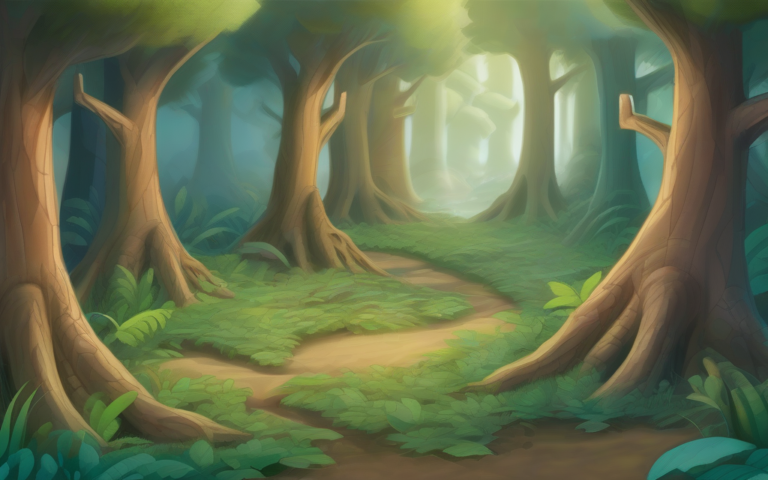
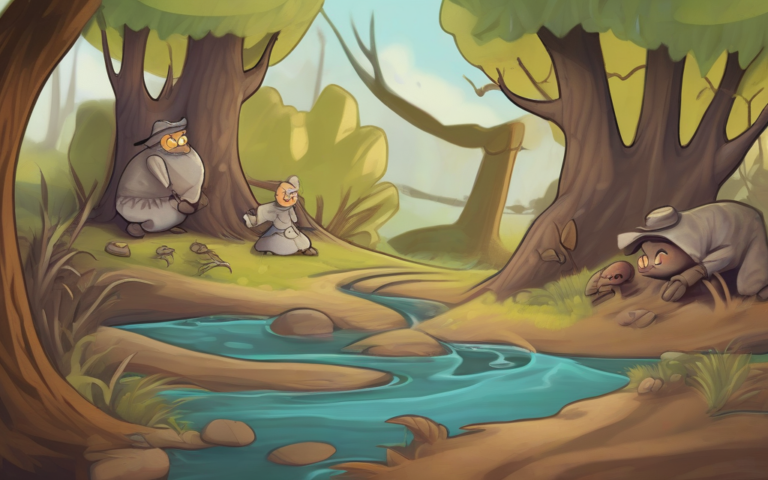
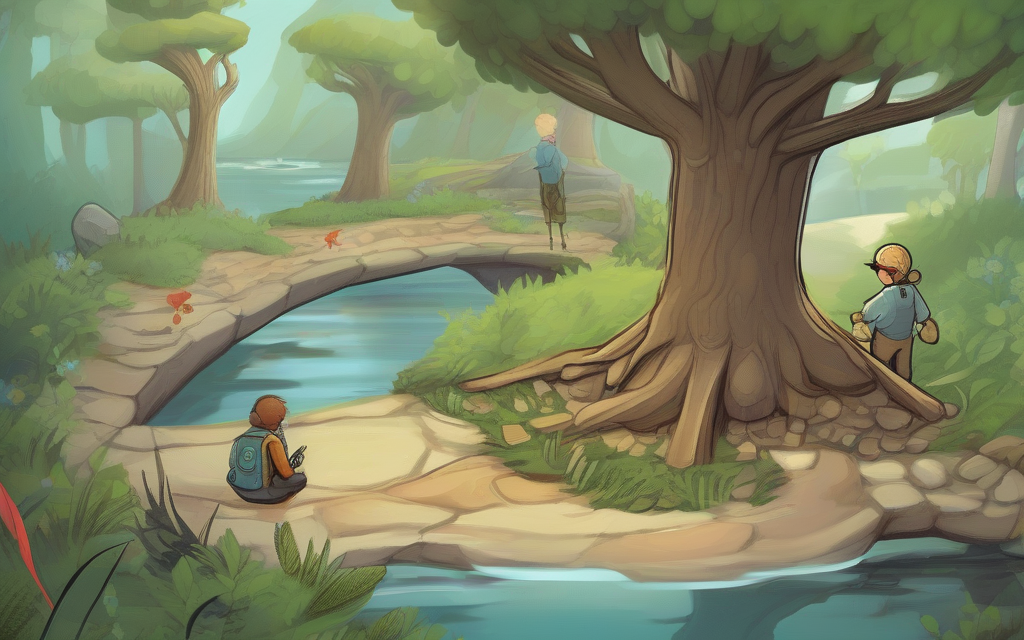
Leo and Maya lived in a small, cozy house at the edge of Whisperwood Forest. Beyond their backyard, a gentle stream wound its way through smooth stones and dappled sunlight. It was their favourite place, a ribbons of clear water that hummed softly as it flowed. Most days, they would sit by its banks, dangling their bare feet in the cool current, imagining what wonders lay beneath the shimmering surface.
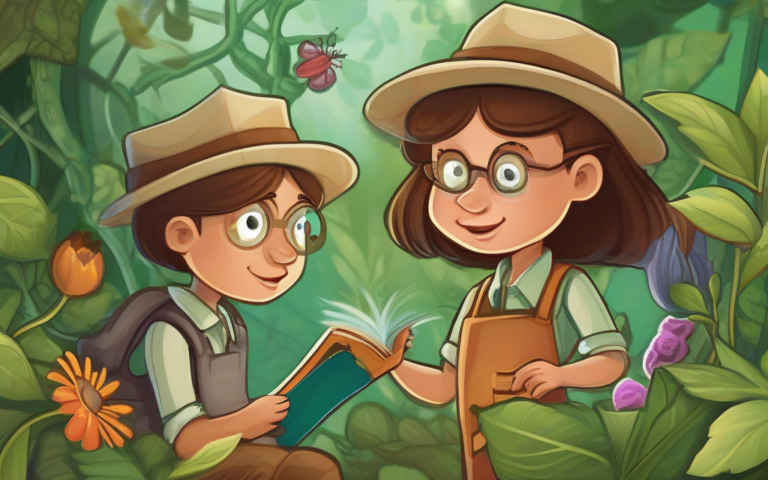
Leo, who was twelve, loved to observe. He’d point out the different kinds of moss on the rocks or the way the sunlight made patterns dance on the water. Maya, his ten-year-old sister, was a dreamer. She saw stories in the rustling leaves and imagined tiny cities built by beetles under fallen logs. Together, they made a perfect team for exploring.
One sunny afternoon, as they watched a bright blue dragonfly dart over the water, Maya frowned. “Leo,” she said, her voice thoughtful, “do you ever wonder what the stream *really* is? I mean, it’s not just water, is it? It feels like a secret world.”
Leo nodded, picking up a smooth, grey stone. “It is! I’ve noticed the water levels change, and sometimes there are tiny, clear fish, and other times I see creatures that look like living twigs scurrying across the bottom. What makes it all happen?”
Their curiosity was a tiny spark that day, but it quickly grew into a warm, glowing fire. They decided to become “Streamologists,” special scientists who studied streams. Their mission: to uncover the secrets of their gentle stream, from the smallest pebble to the highest leaf on the bank.
The next morning, armed with a small notebook, a magnifying glass, and a clear plastic container for temporary observation (always remembering to gently return everything), they began their adventure. Their first discovery was just beneath the water’s surface. Leo carefully scooped a tiny amount of gravel into their container. Among the pebbles, they saw something amazing.
“Look, Maya!” Leo whispered, holding up the container. “These aren’t just bits of wood. They’re insects!”
Indeed, moving slowly among the gravel were several tiny creatures. Some looked like miniature armoured tanks, perfectly camouflaged. “These are caddisfly larvae,” Leo explained, remembering a book he’d read. “They build little cases around themselves from bits of sand, twigs, or leaves to protect themselves from predators. They’re like tiny architects of the stream bed!”
Maya watched in awe as one little caddisfly larva poked its head out, wiggling its antennae. “It’s like they have their own little houses! And they’re building them right here in our stream. How clever!”
They spent hours observing. They saw flat, oval-shaped stonefly nymphs clinging to the underside of rocks, using their strong claws to hold against the current. They watched slender mayfly nymphs, with their three long tails, darting gracefully. “These creatures are incredible engineers,” Maya marvelled. “They’ve figured out how to live in moving water, which must be so tricky!”
Leo sketched the different creatures in their notebook, while Maya tried to imagine what life was like for them. She closed her eyes and pictured herself as a tiny stonefly nymph, feeling the cool water rush over her, finding shelter beneath a giant rock, waiting for a juicy bit of algae to float by. The stream, which once seemed just a path for water, was now revealed as a bustling underwater city, filled with tiny beings adapted in extraordinary ways.
They learned about the “food web” of the stream. The tiny nymphs ate algae and decaying leaves, and in turn, were eaten by small fish like minnows. Larger fish, like the occasional trout, would then eat the minnows. Everything was connected, a delicate balance where each creature played an important role. “If one part of this web disappears,” Leo explained, “it affects everything else. It’s like pulling a thread from a giant blanket – the whole thing can start to unravel.”
Their investigation wasn’t without its challenges. One day, after a particularly heavy rainstorm, the stream looked muddy and swollen. It wasn’t its usual clear, gentle self. They worried about their underwater friends.
“The rain washes soil from the banks into the water,” Leo observed. “That makes it cloudy. It’s harder for the creatures to see, and the mud can even cover their gills or homes.”
Maya noticed a shiny wrapper caught on a branch near the bank. “And look! Sometimes, things that don’t belong here get washed in too.”
They spent some time carefully collecting the wrapper and a few other small pieces of litter they found. “Every little bit helps,” Maya said, feeling a sense of responsibility. They learned that the health of the stream was also in their hands, and in the hands of everyone who lived near it. It wasn’t just a place to visit; it was a living, breathing part of their world.
They also discovered the amazing journey of the water itself. “It rains,” Leo explained, pointing to the sky, “and the water falls into our stream. Then, the sun warms the water, and some of it turns into invisible vapour and goes back up into the sky to form clouds again. It’s a never-ending circle!” Maya imagined tiny water molecules on a grand adventure, sailing through the air, resting in the stream, and then soaring back up again. It was like magic, but it was real.
As the weeks turned into months, Leo and Maya’s “Stream Journal” filled with drawings, notes, and observations. They knew the stream’s secrets, from the tiny creatures hidden beneath stones to the journey of every water droplet. They understood that the stream was not a static thing, but a constantly changing, interconnected ecosystem, brimming with life and wonder. They saw the flow of the water as a steady pulse, carrying life and stories along its path.
They learned that every part of nature, no matter how small or ordinary it seems, is full of incredible design and purpose. From the smallest insect to the largest tree, everything plays a role in the grand, beautiful tapestry of life.
One evening, as the sun dipped below the trees, casting long shadows over their beloved stream, Leo and Maya sat quietly, listening to its gentle murmur. They knew now that even in the most familiar places, there were always new discoveries waiting to be made, if only you looked with open eyes and a curious heart.
The stream, with all its hidden wonders and intricate connections, taught them a profound lesson:
The world around us, even in the most ordinary places, holds incredible secrets and connections if we only take the time to look closely and curiously. Everything is connected, and even the smallest actions can help protect the amazing balance of nature.