# Non-Fiction Story Idea 20
Leo loved the rain. Not just the big, splashing kind, but the quiet, misty drizzle that left everything sparkling. It made the world smell fresh and earthy, especially his Grandma Rose’s garden. Grandma Rose had the best garden, a wild and wonderful place bursting with sunflowers, buzzing bees, and even a tiny, gurgling stream at the back.
One damp morning, after a long night of gentle rain, Leo was exploring. He walked past the tall hollyhocks, their petals still dotted with water, and peered under the leafy canopy of a giant rhubarb plant. That’s when he saw it.
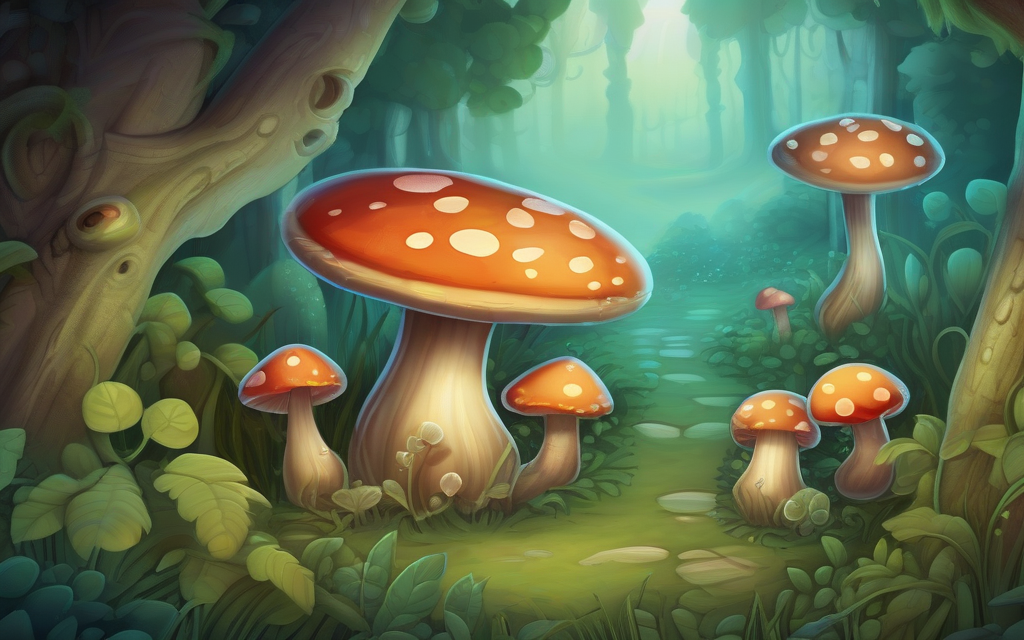
It wasn’t a flower, and it certainly wasn’t a vegetable. Pushing up through the dark, rich soil was a cluster of tiny, orange caps. They looked like miniature umbrellas, grouped together as if having a secret meeting. Some were closed tight, like little buttons, while others had opened, revealing delicate gills underneath. They weren’t quite pretty in the way a rose was, but they were definitely captivating.
“Grandma,” Leo called, his voice a whisper of curiosity. “What are these?”
Grandma Rose, a woman with kind eyes and earth-stained hands, knelt beside him. She smiled, a warm, knowing smile. “Ah, Leo, you’ve found some of nature’s hidden architects! Those, my dear boy, are fungi. Or, as most people call them, mushrooms.”
Leo poked gently at one with a twig. “They look a bit… strange.”
“Strange perhaps,” Grandma agreed, “but wonderfully important. They’re like the quiet, hardworking cleanup crew of the forest and garden. Without them, the world would be a very different, and much messier, place.”
Leo frowned. He had always thought of fungi as something to avoid, sometimes growing on old food or dark, damp places. He hadn’t ever thought about them living here, in Grandma’s beautiful, living garden.
Grandma Rose picked up a fallen leaf, brown and crisp. “See this leaf? When it falls, it needs to break down and return its goodness to the soil. That’s where fungi come in. They have special tools, tiny chemicals, that help them nibble away at dead leaves, old wood, and even fallen branches. They turn all that old stuff into fresh, new food for living plants.”
Leo’s eyes widened. “So they eat dead things?”
“Exactly! And they’re very good at it. Imagine a world where leaves just piled up forever and ever, never breaking down. We’d be swimming in old leaves! Fungi are like tiny, magical recyclers, constantly working underground.”
This idea sparked something in Leo. He started looking at the garden differently. He saw the mushrooms not as strange invaders, but as busy workers. The next day, Grandma Rose showed him a log at the edge of the garden that was covered in bracket fungi, sturdy and shelf-like, growing in layers.
“These are slowly helping to turn this old log back into soil,” she explained. “It might take many years, but they are patient. And look beneath the log, Leo.”
Grandma carefully rolled the log over. Beneath it, a network of fine, white threads spread through the soil. They looked like tiny, delicate spiderwebs, but they were definitely part of the fungi.
“This, Leo,” Grandma whispered, “is the mycelium. It’s like the main body of the fungus, hidden mostly underground. The mushrooms you see above ground are just the ‘fruit’ – the part that helps spread seeds, or ‘spores’ in the case of fungi. This mycelium can spread for miles, connecting plants and sharing nutrients, almost like an underground internet!”
Leo gasped. An underground internet! He imagined tiny messages zipping between plants, helped by these hidden threads. It was incredible. He spent the rest of the afternoon on his hands and knees, gently digging in different spots, trying to find more mycelium. He found it everywhere – under stones, clinging to roots, even in the compost pile.
His curiosity grew stronger than ever. Grandma showed him pictures in a book of fungi from all over the world. Some glowed in the dark, like tiny fairy lights in a tropical forest – bioluminescent mushrooms! Others were shaped like sea corals, or giant puffballs that released clouds of brown dust when stepped on. There were even some that looked like tiny, bright red umbrellas with white spots, straight out of a storybook.
“Each one has a special job,” Grandma explained. “Some help trees grow bigger and stronger by sharing nutrients. Some break down pollution. And some, like the tiny yeasts that make our bread rise, are even helping us in the kitchen!”
Leo felt a deep sense of wonder. He had always thought of nature as the big, obvious things – the soaring birds, the colorful flowers, the majestic trees. But now he saw that a whole other world, a secret, busy world, thrived just beneath the surface, doing vital work.
He learned that while some fungi were helpful, some could make you sick, and a few were even deadly. “That’s why we only admire them with our eyes,” Grandma always reminded him. “Never eat a wild mushroom unless a grown-up who truly knows tells you it’s safe. It’s like a secret language, and we need to learn it carefully.”
One evening, as the sun set in a blaze of orange and purple, Leo sat with Grandma Rose on the porch. He looked out at the garden, no longer seeing just plants and soil, but an intricate dance of life, seen and unseen.
“It’s amazing, isn’t it, Grandma?” Leo said, a quiet smile on his face. “All those tiny, invisible things doing such important work.”
Grandma Rose nodded, patting his hand gently. “It truly is, Leo. The world is full of wonders, big and small. Sometimes, the most important and incredible things are the ones we can’t see, or the ones we don’t expect. It just takes a little curiosity and a willingness to look closer, and suddenly, a whole new world opens up.”
From that day on, Leo never looked at a patch of damp earth the same way again. He knew that beneath the surface, a bustling, invisible world of fungi was busy at work, connecting everything, recycling everything, and silently keeping the whole garden, and the whole planet, healthy and alive. He understood that even the strangest-looking things often hold the most amazing secrets and play the biggest roles.
The clear moral or life lesson: **True wonder often lies in the hidden details and overlooked parts of the world. By staying curious and looking closer, we can discover amazing connections and the vital importance of even the smallest things.**