## Non-Fiction Story Idea 26
Leo and Maya loved visiting their Grandma Elara’s house. Her garden was a wild, wonderful place, bursting with colorful flowers, buzzing bees, and ancient apple trees. But today, the sky was a gloomy gray, and rain pattered steadily against the windowpane.
“It’s no fun,” sighed Leo, pressing his nose against the cool glass. “Too wet to play outside.”
Maya nodded, flipping through a picture book without much interest. “I wish the sun would come out.”
Grandma Elara, with her sparkling eyes and kind smile, came into the living room, carrying a tray of warm apple slices. “Nonsense!” she chuckled. “Rainy days are some of the best days for discovery. Especially for exploring the hidden world.”
Leo and Maya looked at each other, puzzled. “The hidden world?” Maya asked. “What’s that, Grandma?”
“It’s a secret world, right beneath our noses, and sometimes, right under our feet,” Grandma winked. “A world that comes alive when the garden is damp and quiet. Are you brave enough to explore it with me?”
Their boredom vanished. “Yes!” they chorused.
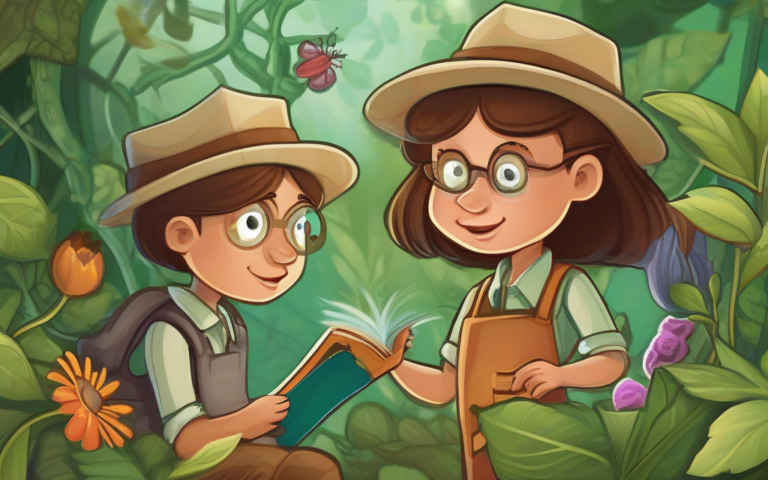
Grandma Elara led them to her old wooden chest by the back door. Inside were two bright yellow raincoats, sturdy green wellington boots, and, most excitingly, a shiny magnifying glass and a small, colorful book titled “The Secret Lives of Forest Friends.”
“Put these on, my little explorers,” she instructed. “Today, we’re going on a treasure hunt for the quiet, fascinating world of fungi.”
Fungi? Leo thought of the plain brown mushrooms he sometimes saw. Not very exciting. But Grandma Elara made everything sound like an adventure.
Once they were bundled up, they stepped into the soft, rain-soaked garden. The air smelled fresh and earthy. Grandma pointed to a patch of moss growing on an old stone wall. “Look closely here,” she said, handing Leo the magnifying glass.
Leo knelt down. Through the lens, the moss transformed. Tiny, velvety green fronds stood tall, like a miniature forest. He saw droplets of water clinging to them like clear jewels.
“Beautiful, isn’t it?” Grandma murmured. “But our real treasures today are the quiet decomposers. They don’t have leaves or roots like plants, and they don’t move around like animals. They have a kingdom all their own.”
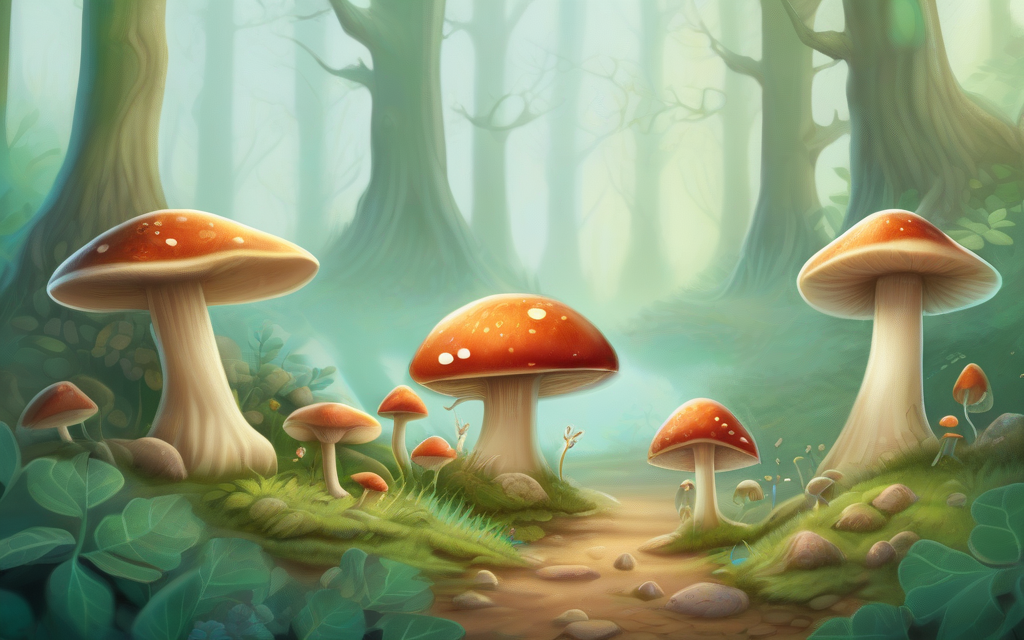
They walked slowly, their boots squishing softly in the wet grass. Maya spotted a group of small, orange-capped mushrooms clustered at the base of an old oak tree. “Look, Grandma! More mushrooms!”
“Excellent observation, Maya,” Grandma praised. “These are indeed fungi. And while the part we see above ground, the ‘mushroom’ part, is amazing, the real magic is happening underneath.”
She gently nudged the soil around the mushrooms with a stick. “You see, most fungi live like a vast, hidden network, like tiny threads reaching out in all directions. This network is called mycelium. It’s like the roots of a plant, but instead of taking water from the soil, it’s busy breaking down dead leaves, fallen branches, and even old tree stumps.”
Leo imagined tiny, invisible spiderwebs stretching through the soil, busily munching on all the things nobody wanted anymore. It was like a miniature clean-up crew working tirelessly, unseen.
They continued their exploration. Underneath a decaying log, they found a shelf-like fungus, smooth and pale, growing in layers. “This one is a bracket fungus,” Grandma explained. “It helps break down the wood, turning it back into rich soil so new plants can grow. Without fungi, our gardens and forests would be piled high with dead things!”
Maya carefully touched the smooth surface. “So, they’re like nature’s recyclers?”
“Exactly!” Grandma smiled warmly. “And some fungi are so tiny, you’d never see them without a powerful microscope. Yeast, for example, is a type of fungus that helps bread rise and makes bubbly drinks. Penicillin, a very important medicine, also comes from a fungus!”
They found iridescent, almost glowing blue mushrooms in a particularly damp, dark spot, looking like something out of a fairy tale. Then, near a patch of wild strawberries, they discovered tiny, umbrella-shaped fungi, no bigger than their fingernails. Each one was a perfect miniature, with delicate gills underneath its cap.
Leo carefully turned a piece of bark over. Beneath it, he saw a white, cottony substance spreading across the damp wood. “Is this the mycelium, Grandma?” he asked, holding up the magnifying glass.
“It sure is, Leo!” she confirmed, beaming. “You’re seeing the very fabric of the hidden world! It’s quiet, but always working, connecting everything.”
As the afternoon light began to soften, they headed back inside, their raincoats dripping but their minds buzzing. They had seen more than just mushrooms; they had peered into a complex, essential system.
Grandma Elara made them hot chocolate. “So, what did you learn about the hidden world today?” she asked.
“That there’s so much going on that we can’t always see!” Leo said, stirring his drink.
“And that even the smallest, quietest things are really important,” Maya added, thinking of the tiny mycelium.
Grandma nodded. “Indeed. The fungi might be hidden, but they are vital. They teach us a wonderful lesson: that the world is full of incredible things if we only take the time to look closely, even at what seems small or ordinary. And that sometimes, the greatest helpers work silently, behind the scenes, connecting everything together.”
From that day on, rainy afternoons were no longer boring. They were invitations to wonder, to discover the silent, magical workers of the hidden world, and to remember that every little part of nature, seen or unseen, plays a big role.
**Moral of the story:** The most amazing discoveries often happen when we take the time to look closely at the hidden, quiet parts of the world around us. Even the smallest things can be incredibly important and wonderfully interconnected.