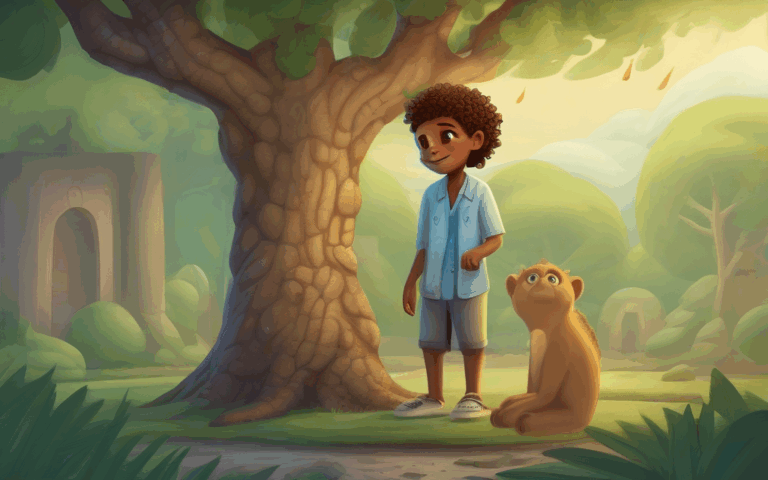
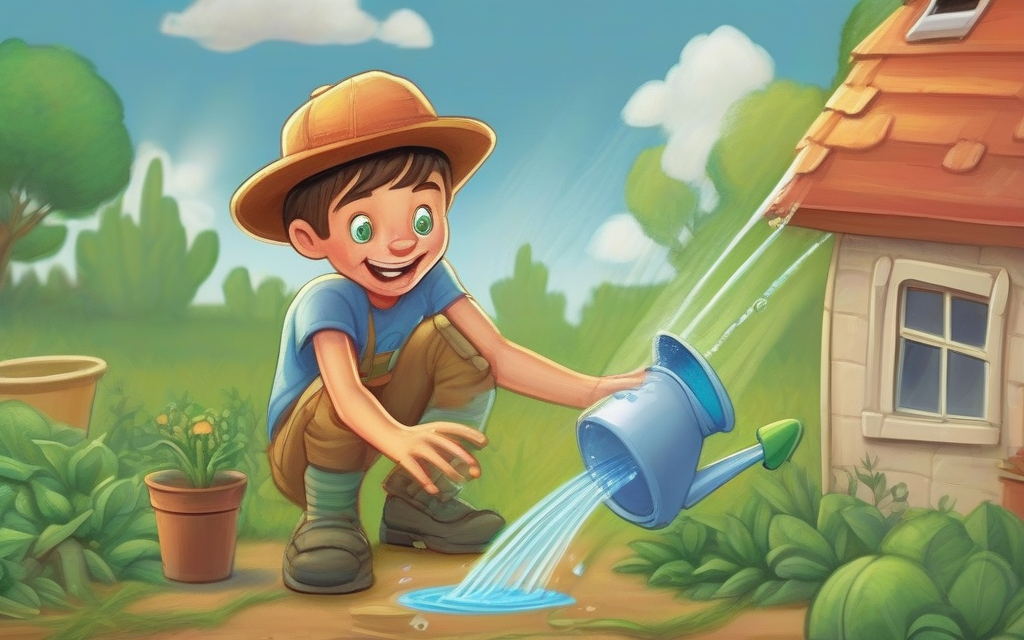
The big announcement shimmered on the school bulletin board like an exciting secret: The Annual Willow Creek Science Fair was just two months away! For eleven-year-old Alex, this wasn’t just another school event; it was a chance to finally bring a lifelong dream to life. Alex had always dreamed of building something amazing, something that would change the world, even in a small way. This year, the dream was clear: a fully automated, solar-powered watering system for gardens, complete with sensors that knew exactly when each plant needed a drink.
“Imagine, no more wasted water!” Alex exclaimed to a best friend, Maya, during lunch. “And plants would always be perfectly hydrated!”
Maya, who loved art more than circuits, smiled. “That sounds super complicated, Alex. Are you sure you’re not trying to build a spaceship?”
Alex laughed, but a tiny flutter of doubt danced in their stomach. Maya was right. It did sound complicated. But Alex pushed the doubt away. This was *the* project. This was *the* year.
The first week was a whirlwind of research. Alex devoured books about solar panels, studied diagrams of irrigation systems, and spent hours online watching videos about plant biology. The notebook filled quickly with intricate drawings and equations. Alex even started a small budget plan, figuring out how much the parts would cost. It was all very exciting, like planning a secret mission.
Then came the second week, and the excitement began to dim. Alex realized just how many different components were needed: tiny water pumps, moisture sensors, a micro-controller, solar cells, batteries, pipes, nozzles, and so much wiring. Each part seemed to have its own language of specifications and connections. Trying to understand how they all fit together felt like trying to solve a giant, invisible puzzle.
One evening, Alex sat surrounded by half-drawn schematics and confusing instruction manuals, a small frown deepening on their face. A tiny prototype of a water pump sputtered for a second, then went silent. Alex tried again, wiggled a wire, but nothing. Frustration bubbled up. The dream project, which had felt so bright and clear, now seemed like a foggy, distant mountain too high to climb. Other classmates were already talking about their simple volcano models or lemon battery experiments, and Alex felt a pang of envy. Their projects seemed so much easier.
Alex’s mom, noticing the quiet and the scattered papers, came into the room. “Everything okay, sweetie? You’ve been very focused on your science fair project.”
Alex sighed, a long, shaky breath. “It’s too hard, Mom. My solar-powered watering system… I don’t think I can do it. There are too many parts, and I don’t understand how they all connect. It’s just a mess.” Alex pointed to the silent pump. “It won’t even work.”
Mom sat down beside Alex, picking up one of the circuit diagrams. “This is a very ambitious idea, Alex. And it’s wonderful to have such a grand vision. But sometimes, when a problem feels too big, we need to make it a little smaller first.”
“Smaller?” Alex mumbled, looking at the complex plans. “But I want to build *this*.”
“Think about what you’re most curious about in this project,” Mom suggested gently. “Is it the solar power? The sensors? Or the plants themselves and how they drink?”
Alex thought about it. The truth was, what had really sparked the idea was watching their own small potted basil plant wilt when they forgot to water it. It had been sad to see the leaves droop. The plants. It was always about helping the plants.
“I guess it’s about making sure plants get what they need,” Alex finally said. “And understanding how they use water.”
“That’s a fantastic starting point!” Mom smiled. “Instead of building a whole automated system, why don’t you focus on just one part of your original idea? What if you explored how different plants absorb water, or what happens when plants get too much or too little? You could compare different types of soil, or even measure how much water a plant needs in a day.”
It was like a switch flipped in Alex’s mind. The giant, overwhelming mountain suddenly shrank into a series of smaller, climbable hills. A practical lesson bloomed: sometimes, the most challenging problems can be solved by breaking them down into simpler, more manageable steps. It wasn’t about giving up the dream, but making the first step towards it more achievable.
The next day, Alex changed the project plan. The new title was “The Secret Lives of Plant Roots: A Study of Water Absorption.” It still involved plants and water, but it was much simpler. Alex decided to compare how different types of soil affected how quickly water reached a plant’s roots, and how much water plants would take up over a week. This project felt exciting again, and more real.
Alex gathered materials: three small pots, three identical bean seeds, three different types of soil (sandy, clay, and regular potting mix), and a measuring cup. Alex carefully planted a bean seed in each pot, labeling them clearly. Every day, Alex measured out the exact same amount of water for each plant, observing how quickly the water drained or was absorbed. Alex recorded everything in a neat chart: how tall each plant grew, the number of leaves, and how the soil felt. It was a discipline, a daily ritual of observation and data collection.
There were still small challenges. One day, the plant in the sandy soil seemed to wilt a little. Alex remembered reading that sandy soil drains very quickly. So, Alex tried giving it a tiny bit more water, and the plant perked up. This wasn’t a failure; it was a learning moment, an adjustment based on observation. Alex learned the value of careful attention and adapting when things didn’t go exactly as planned.
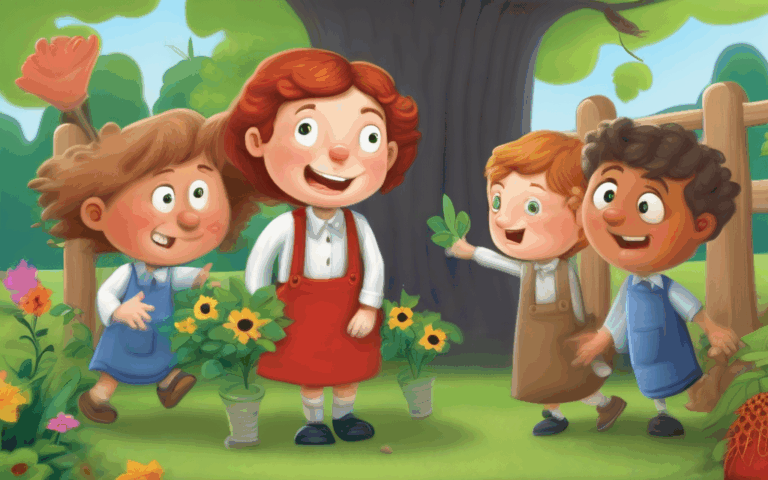
Maya, seeing Alex’s new setup, came over one afternoon. “Wow, Alex, your bean plants are getting so big! And your charts are so neat.”
Alex beamed. “Thanks, Maya! I’m learning so much. Did you know that clay soil holds onto water for ages, but sandy soil lets it all go really fast? It makes a huge difference to the plants!”
Maya looked genuinely interested. “That’s actually pretty cool. So, what kind of soil does your basil plant at home have?”
Alex’s new project was less about fancy technology and more about pure curiosity and observation. It wasn’t about building a complex machine, but about understanding the quiet, amazing science happening right in their backyard. The dream had shifted from building a perfect system to understanding a perfect system that already existed: nature.
Science Fair day arrived, and the school gym buzzed with energy. Alex proudly stood beside a display board filled with charts, drawings, and photos of the three thriving bean plants. There was no complicated wiring or blinking lights, but there was a clear, simple story of discovery. Alex explained how the plants grew, why certain soils worked better, and how even small changes in watering could make a big difference.
The judges listened intently, asking questions about the data and Alex’s observations. Alex answered confidently, feeling a surge of pride in all the hard work and learning.
When the awards were announced, Alex didn’t win first prize for the most innovative project, or the most complex one. But Alex did receive a special ribbon for “Outstanding Observation and Practical Application.” One judge told Alex, “Your project shows true scientific spirit, Alex. You observed a problem, simplified it, and found real answers. That’s excellent science.”
As Alex packed up the display, clutching the ribbon, a profound sense of accomplishment settled in. The initial dream of the automated watering system still glimmered in the distance, a grander project for another day. But today’s achievement felt even better. Alex hadn’t just built a project; Alex had built confidence, learned about perseverance, and discovered the joy of simple, everyday science. The greatest prize wasn’t a trophy, but the journey of learning itself, and realizing that every big dream starts with a curious question and a single, determined step.
The moral of Alex’s story is that even the grandest dreams can feel overwhelming if we try to achieve everything at once. Sometimes, the wisest path is to start small, observe carefully, and learn step by step. Every little discovery, every bit of effort, builds toward something wonderful, and the journey of learning is often the most rewarding part of all.