Young Ivan loved helping his grandparents, especially when it meant exploring the forgotten corners of their cozy home. One warm, sleepy afternoon, his grandmother handed him a dusty rag and pointed towards the attic hatch. “A little tidying up, dear one,” she said, her voice soft as velvet. “Who knows what treasures you might find.”
The attic was a kingdom of shadows and whispers. Sunbeams, thick with dancing dust motes, pierced through a small window, illuminating forgotten rocking chairs, stacks of old books, and trunks overflowing with memories. The air smelled of aged wood, dried herbs, and a hint of something sweet and distant, like forgotten flowers. Ivan carefully stepped over a worn rug, his boots crunching softly on the loose floorboards. Deep in a corner, beneath a yellowed sheet, he saw a shape.
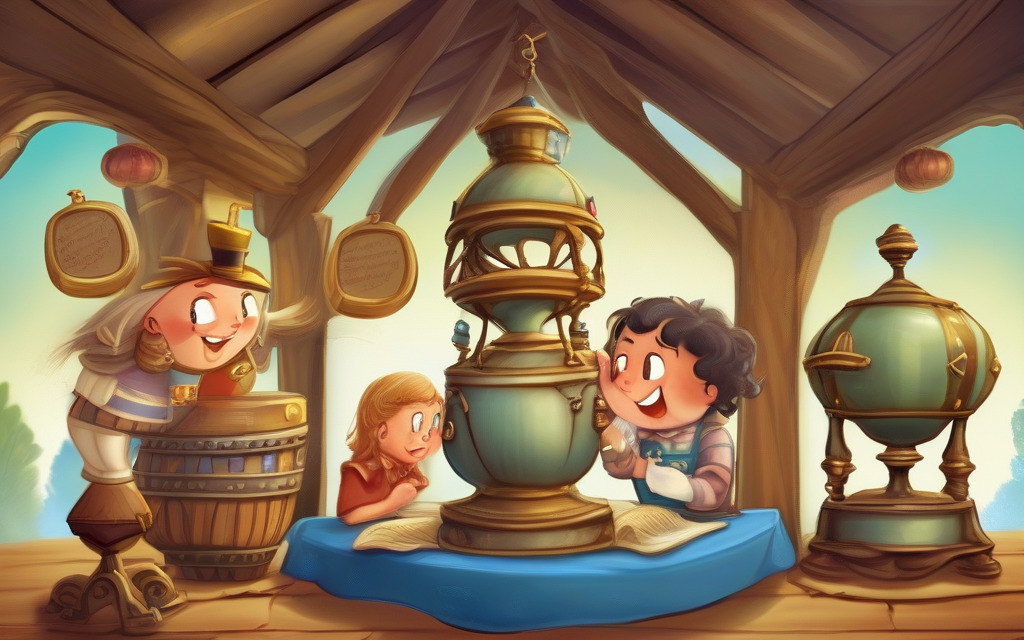
He tugged the sheet away, sending a cloud of ancient dust puffing into the air. What he uncovered made him gasp. It was a samovar, grand and elegant, made of tarnished copper that gleamed dully even under layers of grime. It had intricate patterns swirling across its belly, a delicate spout, and two sturdy handles that looked like tiny, outstretched arms. It seemed to hold a quiet dignity, as if waiting patiently for something important.
Ivan spent the next hour polishing the samovar until its copper skin shone like a newly minted coin. He admired the reflection of the dancing dust motes in its bright surface. “Grandmother,” he called, carrying it carefully downstairs, “look what I found!”
His grandmother smiled, her eyes twinkling. “Ah, the old singing samovar! We haven’t used it in ages. Let’s make some tea.” She filled it with water and added a spoonful of fragrant black tea leaves, along with a pinch of dried currant and a sliver of honey. As the water began to warm, a low hum vibrated from within the samovar. The hum grew, gentle as a breeze through willow leaves, until it blossomed into a tune.
It wasn’t just a hum; it was a song. A melody so ancient and tender, it seemed to carry the warmth of a thousand hearths. Ivan felt a strange calm spread through him, chasing away the afternoon’s tiredness and filling him with a peaceful joy. The notes were like velvet ribbons, weaving through the air, whispering comfort. He watched, mesmerized, as his grandmother’s usually busy hands stilled, a soft smile gracing her lips. The tea poured from the samovar’s spout, golden and steaming, carrying the scent of berries and warmth.
Soon, the village faced a problem. A vital wooden bridge, spanning a fast-flowing river, had collapsed during a sudden storm. Travelers were stranded, trade was halted, and the usual lively chatter in the market square was replaced by frustrated sighs. Builders worked tirelessly, but the task seemed insurmountable, their spirits flagging.
Ivan remembered the samovar’s peaceful song. He gently carried it to the riverbank, past the weary workers, who looked up with curious eyes. He filled the samovar, adding his grandmother’s fragrant tea blend. As the water heated, the ancient lullaby began to flow, its notes drifting over the roar of the river and the clang of hammers. The workers paused, listening. A sense of calm settled over them. Their movements became steadier, their minds clearer. Arguments quieted. Hands that had been fumbling now worked with renewed focus and precision. The bridge pieces, once awkward and stubborn, seemed to slot together with surprising ease. By sunset, the new planks were secured, and the bridge, strong and safe, stood proudly again, all thanks to the samovar’s quiet encouragement.
Not long after, whispers of a colossal, grumpy bear began to spread through the village. It had woken early from its long sleep, cross and hungry, rummaging through berry bushes too close to the village edge, frightening anyone who ventured near the forest path. Fear tightened the villagers’ hearts, and children were kept indoors.
Ivan knew what to do. With a deep breath and the samovar carefully held in his arms, he ventured just to the edge of the whispering forest, where the bear’s growls could be heard. He found a sturdy rock, set down the samovar, and filled it with water and tea. The forest creatures paused, listening as the samovar’s gentle song began to fill the air, a melody like a soft embrace. Deep in the woods, the rumbling growls softened, then quieted entirely. Soon, a massive, shaggy head emerged from behind a stand of pines. The bear, usually ferocious, lowered its head, its heavy eyelids drooping. The ancient lullaby washed over its wild heart, soothing its anger and hunger, replacing it with a profound sense of peace. The bear stretched, yawned, and slowly, calmly, turned away, lumbering deeper into the forest, leaving behind only the scent of pine and a newfound stillness.
Finally, the samovar was called upon to mend a different kind of wound. Two neighboring families, the Petrovs and the Volkovs, had been feuding for generations over a forgotten boundary line. Their arguments were legendary, their voices often echoing through the village square, causing distress and sadness among their friends.
Ivan, with the samovar sparkling bright, invited both families to a shared tea at the village green. Hesitantly, they came, stiff and silent. Ivan filled the samovar, and its notes, tender as a mother’s touch, drifted around them. The ancient song wove its way through their hardened hearts, untangling old grievances, reminding them of shared laughter and simple kindnesses from long ago. The stiffness in their shoulders began to ease. Mrs. Petrov offered Mr. Volkov a small, hesitant smile. Mr. Volkov, in turn, murmured a quiet apology for a long-forgotten slight. Slowly, they began to speak, not of arguments, but of the fragrant tea and the beautiful, calming melody. By the time the samovar was empty, the families were sharing stories, their laughter mingling with the last, fading notes of the song, finally finding peace.
The village rejoiced in its newfound harmony. The bridge was strong, the forest safe, and neighbors were friends again. Ivan, a quiet hero, often brought out the samovar for village gatherings, its gentle songs a cherished comfort. One evening, as the sun dipped below the hills, painting the sky in shades of honey and rose, Ivan filled the samovar one last time before putting it away for the night.
This time, the song that poured forth was different. It wasn’t a lullaby for healing or calming. It was a melody of deep, quiet contentment, a song that filled the heart with warmth and a profound sense of gratitude. It sang of the simple pleasure of a shared cup of tea, the quiet beauty of a sunset, the comfort of a warm home, and the joy of kind friendships. It reminded Ivan and everyone listening that the truest magic wasn’t always in grand gestures or miraculous fixes, but in appreciating the small, constant comforts that make life rich and sweet. And in the soft glow of the evening, surrounded by the scent of warm tea and the hum of happiness, Ivan understood that some of the most precious treasures were the ones that taught hearts to be grateful.