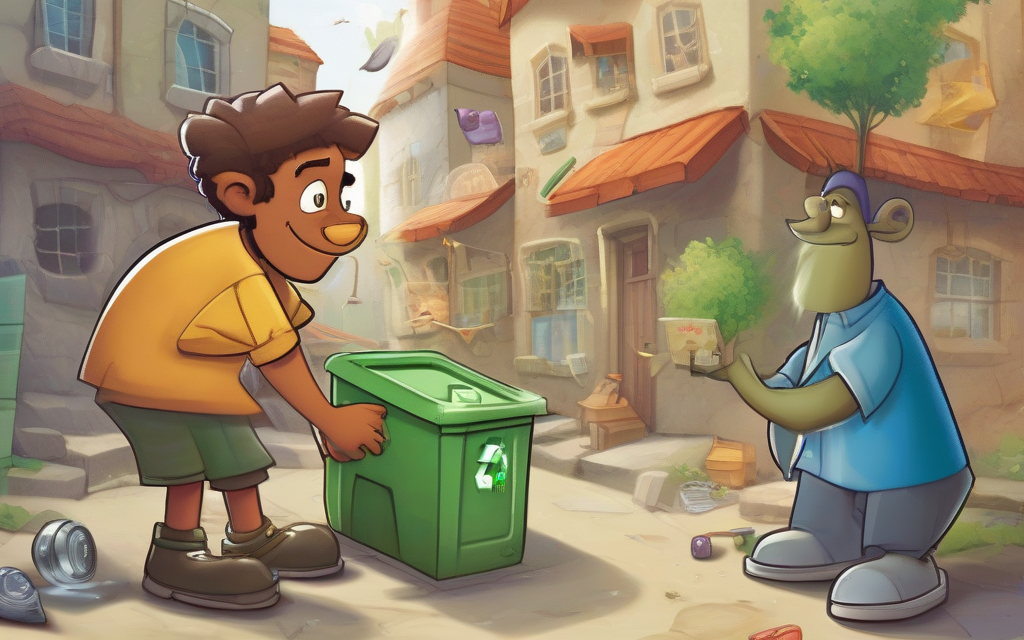
# The Child Who Recycled Everything
Leo wasn’t like most twelve-year-olds. While his friends were busy playing video games or planning soccer strategies, Leo often found himself staring intently at… trash. Not just any trash, but the contents of recycling bins, wondering where each plastic bottle, cardboard box, or tin can would end up. He lived in the town of Greenview, a place proud of its recycling program, yet Leo felt there was a hidden problem.
His room, usually a cheerful mess of books and art supplies, was starting to look like a small sorting station. He had learned from his parents that recycling was important for the planet, saving resources and reducing landfill waste. But the more he learned, the more he realised it wasn’t as simple as just “throwing it in the blue bin.”
One afternoon, Leo was helping his mom sort their weekly recycling. He held up a plastic container that once held strawberries. “Mom,” he asked, “does this really go in with the plastic bottles? It feels different.”
His mom paused, a slight frown on her face. “You know, Leo, that’s a good question. I usually just put all plastics together. The town website says ‘plastics 1-7,’ but I never know what those numbers mean.”
Leo nodded. He’d seen those tiny numbers too, often hidden on the bottom of containers, like secret codes. This small moment sparked a bigger idea in Leo’s mind. If even his grown-up parents were unsure, how many other people in Greenview were making mistakes? He knew that if the wrong things ended up in the recycling, it could contaminate the whole batch, meaning nothing in that truckload would get recycled properly. It would all end up in the landfill, defeating the whole purpose.
That evening, Leo started his own little research project. He pulled out his tablet and typed “What can I recycle?” He discovered that different towns had different rules. He learned about “single-stream” recycling versus “multi-stream.” He found out that greasy pizza boxes weren’t recyclable, even though they were cardboard, because the oil soaked into the fibers. He learned about the importance of rinsing food containers. It was like a giant puzzle, and Leo felt a growing determination to solve it, not just for his house, but for his whole town.
His first step was to become the ultimate recycling expert in his own home. He created clear, colourful labels for each bin: “Clean Plastic Bottles & Jugs,” “Paper & Cardboard (Clean Only!),” “Metal Cans,” and even a separate box for “Glass Jars (Rinsed!).” He patiently explained to his family why things like plastic bags couldn’t go in the main recycling (they jammed the machines!) and why bottle caps needed to be put back on plastic bottles. Slowly, his family’s recycling habits became perfect. Their bins were models of clarity.
But Leo couldn’t stop there. He noticed the recycling bins at his school, Greenview Elementary, were often a chaotic mix of items. He saw half-eaten apples tossed in with paper, and juice pouches mixed with plastic bottles. It made his stomach flutter with concern.
He decided to talk to his teacher, Ms. Anya, during recess. “Ms. Anya,” he began, “I’ve been learning a lot about recycling, and I think our school could do even better.”
Ms. Anya, a kind woman with bright, curious eyes, listened attentively as Leo explained about contamination and the secret plastic numbers. She was impressed. “Leo, that’s a wonderful observation,” she said. “What do you suggest we do?”
Leo, though a bit nervous, had already thought about it. “Well, first, we need clearer labels on all the bins. And maybe, a small poster in each classroom showing exactly what goes where. And maybe… maybe we could have a ‘Recycling Champion’ for each week, who makes sure everyone sorts correctly?”
Ms. Anya smiled. “Those are fantastic ideas, Leo. Let’s make a plan. Would you like to lead a small team to help with this?”
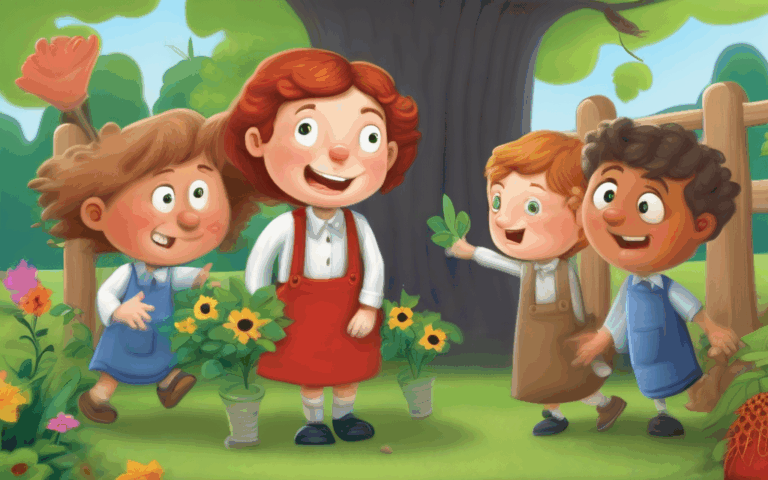
Leo’s eyes lit up. He recruited his best friend, Maya, who was brilliant at drawing, and their classmate, Sam, who was great at organizing. Together, they became the “Greenview Elementary Recycling Squad.”
Maya designed bright, easy-to-understand posters with pictures of items that could and couldn’t be recycled. She drew friendly cartoon characters demonstrating how to rinse a yogurt cup or flatten a cereal box. Sam helped Leo survey all the bins in the school, identifying problem areas and figuring out where new labels were needed.
Leo, meanwhile, took on the role of educator. He prepared a short, fun presentation for each classroom, explaining the “why” behind proper recycling. He showed them videos of recycling plants and explained how their efforts helped save animals and trees. Some kids were still confused, some were impatient, and a few even thought it was boring. But Leo didn’t give up. He answered every question patiently, showing real examples, and making it clear that every little bit of effort made a big difference.
The biggest challenge came during lunch. The cafeteria was a whirlwind of food scraps, trays, and half-finished drinks. Leo and his team worked tirelessly, standing by the recycling stations, guiding their classmates. “Remember, no food waste in the paper bin!” Leo would remind gently. “Plastic bottles only, please, make sure they’re empty!” Maya would add, pointing to the colourful posters she’d created. Sam made sure the bins were emptied regularly and the labels stayed clean.
It wasn’t always easy. Sometimes, after a particularly busy lunch, Leo would feel tired and a little discouraged. He’d see someone toss an unrinsed milk carton into the plastic bin and sigh. But then he’d remember a small victory – a younger student carefully rinsing their juice box before putting it in the right bin, or a friend asking him for advice on recycling something at home. Those moments kept him going.
Slowly, change started to happen. The school’s custodians noticed a big improvement in the cleanliness and correct sorting of the recycling bins. Ms. Anya collected data and found that the amount of contaminated recycling had dropped by more than half! The local recycling centre even sent a special note of thanks to Greenview Elementary, praising their improved efforts.
The principal announced Leo, Maya, and Sam as the “Greenview Green Heroes” during a special assembly. Leo, standing on stage, felt a warm glow spread through him. He looked out at his classmates, many of whom were now confidently sorting their waste. He realised that he hadn’t just recycled trash; he had recycled habits, turning confusion into clarity, and apathy into action.
The school’s success even inspired the wider community. Encouraged by the principal and Ms. Anya, Leo and his team created simplified recycling guides for the town website and shared their tips at a community meeting. Soon, Greenview was known as one of the most efficient recycling towns around.
Leo learned that one person’s curiosity and determination could spark a wave of positive change. He started by looking at trash, but he ended up helping his whole community understand the true value of every single item we use.
The moral of Leo’s story is this: Don’t ever think you are too small to make a big difference. When you see a problem, big or small, take the time to learn about it, then take the first step to help. Your actions, even simple ones like sorting recycling correctly, have a ripple effect. They protect our beautiful planet, inspire others, and show everyone that caring for our world is everyone’s job, and a joyful one at that. So, next time you hold something in your hand, take a moment to think: Can this be given a new life?