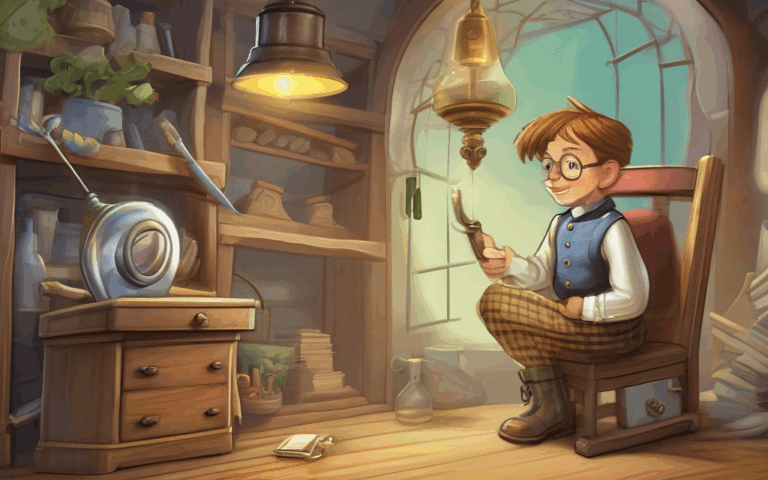

The sun always shone brightly over Sunny Valley, making the leaves on the trees shimmer and the flowers in Mrs. Gable’s garden bloom in a riot of color. Eleven-year-old Leo loved living there. He loved playing soccer in the park, riding his bike down winding paths, and exploring the creek that gurgled happily at the edge of town. But lately, something felt different.
Leo’s mom often sighed when she looked at the garden. The bright flowers seemed a little droopy, and patches of grass were turning brown. “It’s this heat, Leo,” she’d say. “And the water bill keeps going up!”
One morning, the principal at Leo’s school, Mr. Harrison, made an announcement. “Team, we need to be mindful of our water use. The town reservoir levels are lower than usual, and it’s important for all of us to do our part.”
Leo thought about this. He knew water came from the tap, but where did it really come from? And why was it suddenly a problem?
That evening, Leo watched his dad wash the car with the hose running the whole time. He saw his sister, Mia, take a super long shower, steam filling the bathroom. Later, when he brushed his teeth, he let the water run while he scrubbed. He hadn’t really thought about it before. It was just… water. Always there.
The next day in class, Ms. Lily, Leo’s kind teacher, started a special lesson. She put up a big map of the world and pointed to the blue parts. “Most of our Earth is covered in water,” she explained, “but only a tiny bit of it is fresh water, the kind we can drink and use for our plants and everyday life.”
She showed them pictures of places where water was scarce, where people had to walk miles just to get a bucketful. She explained how water traveled in a cycle, from clouds to rain, to rivers and reservoirs, and then to their homes. “When we waste water, we’re not just making the water bill go up,” she said softly. “We’re using up a precious resource that needs to be shared by everyone and everything.”
Leo’s eyes widened. He thought about the running hose, Mia’s long shower, and his own dripping tap. He felt a little knot of worry in his stomach. He hadn’t meant to be wasteful, but he hadn’t known any better.
That afternoon, Leo went home with a new mission. He decided to become a ‘Water Watcher’. His first step was simple: when he brushed his teeth, he turned off the tap. It felt strange at first, but it was easy.
Then, he noticed the small leak under the kitchen sink. Drip, drip, drip. Each drop seemed to shout, “Waste! Waste!” He told his dad, who had always meant to fix it but kept putting it off. “You’re right, Leo,” his dad said, surprised. “I should get to that.” By the weekend, the leak was gone.
Mia grumbled when Leo gently reminded her about her long showers. “Just five minutes, Mia!” he’d call through the bathroom door. Slowly, she started to take shorter showers. His mom, seeing Leo’s enthusiasm, began to collect the water from washing vegetables in a basin and used it to water her thirsty plants. The brown patches in the garden started to fade.
But Leo didn’t stop at home. At school, during recess, he saw the sprinklers watering the sports field, even though it had rained lightly that morning. He noticed a water fountain that often dripped.
He felt a bit shy, but he remembered Ms. Lily’s words about doing their part. So, after class, he went to her desk. “Ms. Lily?” he began. “I’ve been trying to save water at home, and I noticed some things at school too.”
Ms. Lily listened carefully, her eyes warm. “That’s wonderful, Leo! You’re being a real leader.” She thought for a moment. “What if we start a ‘Water Savers’ club? You could help us find ways to be smarter about water here at school.”
Leo’s heart swelled with excitement. A club! He and his best friend, Sam, and his classmate, Maya, were the first to join. Ms. Lily helped them. They made colorful posters with catchy slogans like “Turn Off the Tap!” and “Every Drop Counts!” They put them up near the restrooms and water fountains.
The ‘Water Savers’ club even got permission to check the school grounds for leaks and suggest when the sprinklers really needed to be on. They spoke during assembly, explaining in simple terms why water was so important and how everyone could help.
At first, some kids just shrugged, but when they saw Leo and his friends enthusiastically turning off taps, reporting drips, and even suggesting ways to reuse water from art class to water the classroom plants, more and more students started to pay attention. The school janitor, Mr. Henderson, even thanked them for pointing out a leaky pipe in the boiler room, which he quickly fixed.
A few months later, the results were amazing. The school’s water bill had gone down significantly, and the plants in the school garden looked healthier than ever. At home, Leo’s mom smiled. “Our water bill is much lower this month, Leo,” she said, hugging him tight. “And the garden has never looked better!”
Leo felt a warm glow spread through him. He hadn’t invented a new machine or discovered a hidden treasure. He had just paid attention, learned, and taken small, consistent steps. He had shown everyone that even a simple action, like turning off a tap, could lead to a big change.
The town reservoir levels slowly began to recover, and Sunny Valley stayed green and beautiful. Leo, the boy who simply noticed and cared, had helped everyone remember that water isn’t just water; it’s life. And every single drop is worth saving.
The moral of the story is: Big changes often start with small actions. When we all take responsibility and work together, we can protect our precious world, one drop at a time.